The Support Edit

Updated: Mar 10
The Importance of Supportive Sports Bras in Women’s Fitness
Research from the University of Portsmouth’s Research Group in Breast Health highlights how essential a properly fitting sports bra is not just for comfort but also for performance, confidence, and long-term health. According to Renwick (2023), 51% of female athletes experience breast pain, and almost a third report that a poorly fitting bra directly affects their athletic performance. When Team GB athletes were professionally fitted ahead of the Tokyo Olympics, 97% reported better comfort, support, and fit, and 17% said the correct bra significantly improved their performance.
Renwick explains that because breast tissue has very limited natural internal support, excessive movement during exercise can overstretch skin and Cooper’s ligaments, leading to pain and long-term damage. Low-support bras also negatively affect biomechanics, reducing running efficiency, altering breathing patterns, increasing fatigue, and raising the risk of lower-body injuries.
Crucially, the research also links supportive sports bras to better body image, higher self-esteem, and reduced embarrassment, which is especially important in gym environments where many women already feel scrutinised.

Breast Health + The need for proper support
Cooper’s ligaments are a key anatomical structure when understanding why breast support matters in fitness environments. These thin, delicate connective tissues help maintain the breast’s natural position and shape, but they are not particularly strong. During high-impact movement, such as running, HIIT, or weight training, the breasts can move independently of the body, creating excessive strain on both the skin and Cooper’s ligaments. Research shows that when these ligaments are repeatedly overstretched, they cannot return to their original tension, which can contribute to long-term breast sagging, discomfort, and loss of structural support. Without external support, this movement also affects performance: changes in stride, upper-body fatigue, and altered breathing patterns have all been linked to insufficient breast support during exercise. Understanding the function and vulnerability of Cooper’s ligaments reinforces the importance of well-designed sports bras, especially for women in strength or hybrid training environments.
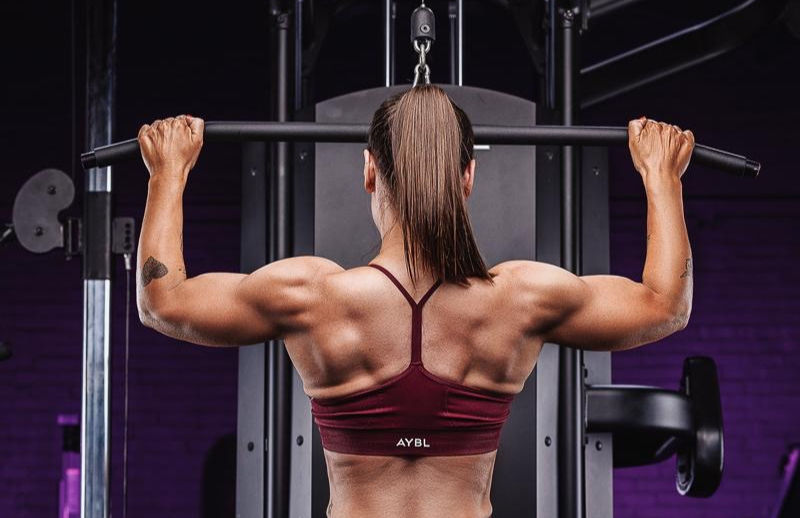
What makes a good sports bra?
Support Structure
According to the University of Portsmouth, high-support bras work best with encapsulation features, padded cups, nylon fabric, and an adjustable underband.
The underband is critical; a firm, level band provides the majority of support.
Different styles of bras (compression, encapsulation, or hybrid) are used depending on impact level and breast size.
Material & Breathability
Use moisture-wicking fabrics like nylon, polyester, or technical blends so sweat is drawn away from the skin.
Breathable or mesh panels help air circulation and comfort during intense or long workouts.
Durable stitching and elastic: reinforced seams give longevity and prevent chafing.
Fit & Comfort
Straps: wide and adjustable straps are ideal because they distribute weight and can be customised for different body shapes.
The breast should be fully enclosed in the cup without gaps or spillage.
The band should feel snug but not restrict breathing, and the straps shouldn’t dig in.
Bounce Control & Safety
A good sports bra reduces breast bounce significantly.
Protecting connective tissues like Cooper’s ligaments is important. Without support, these ligaments can stretch and become permanently damaged.
Reducing excessive movement also helps with comfort, posture, and performance.
Design Features
Optional but useful: hook-and-eye closures enable adjustability and a customised fit.
Seamless or flat-seam construction reduces chafing and irritation during movement.
Versatility: for high-impact workouts, hybrid bras (compression + encapsulation) are recommended.
Recommended high-support sports bras:


How to Check Your Sports Bra's Fit:
Wearing the right sports bra isn’t about aesthetics; it’s about support, comfort, and long-term breast health. Ill-fitting bras can contribute to back pain, shoulder strain, and unnecessary breast movement during exercise.
Here’s how to check yours properly:
1. The Band Test (Most Important)
The band provides around 70–80% of the support.
It should sit level around your ribcage, not riding up at the back.
You should be able to fit two fingers underneath comfortably.
If it feels loose on the tightest hook when new, it’s too big.
If the band rides up during movement, you’re not getting enough support.
2. The Bounce Test
Jump lightly on the spot.
Minimal movement = correct support level.
Excessive bounce = you may need a higher-impact bra.
3. The Strap Check
Straps should:
Sit comfortably without digging into shoulders
Not fall down during movement
If your straps are doing all the work, your band size may be incorrect.
4. The Cup Fit
No spilling over the top or sides
No gaping or wrinkling
Breast tissue should be fully enclosed
If you see side spillage, you likely need a larger cup size, not necessarily a bigger band.
5. Movement Comfort
Raise your arms overhead. Twist side to side.
Your bra should:
Stay in place
Feel secure but breathable
Not restrict your breathing
Different workouts require different support. Walking and yoga don’t require the same structure as HIIT or running.


Comments